
Large animals collisions increase especially in autumn when the days become shorter and darker and peak traffic hours fall in the twilight period, both in the morning and in the evening. “Long-term accident statistics show that there are almost twice as many collisions with large animals in autumn between October and December as in early spring and midsummer,” said Villu Lükk, Head of Environmental Management at the Transport Administration.
In autumn, hunters start joint hunts for large animals, mainly on weekends, which drives wild animals to move and they may end up on the roads more often.
In many places across Estonia, animal crossings have been created on fenced road sections, which are equipped with warning signs. The Transport Administration also posted the notice ‘Beware of wild animals’ on road information displays after dark.
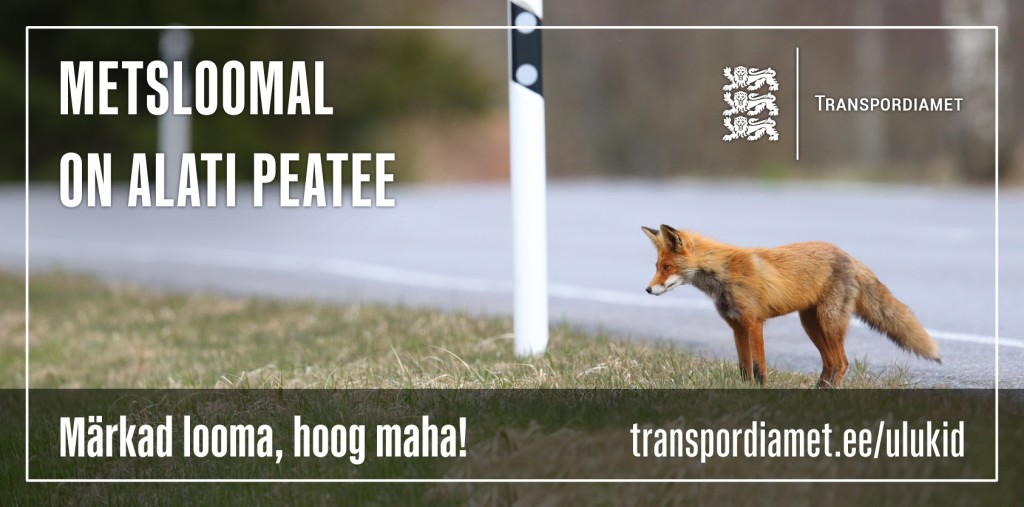
“Wild animals have their trodden paths that they do not willingly change,” said Lükk. “Therefore, you must be especially careful in the area of the ‘Wild animals on the road!’ sign, follow the speed limits and, if necessary, slow down. A wild animal always has the right of way.”
Approximately 6000 traffic accidents involving wild animals are registered annually on Estonian national roads. Approximately 20-30 people are injured in these accidents annually. In recent years, the problem has increased because there are more vehicles on Estonian roads.

