
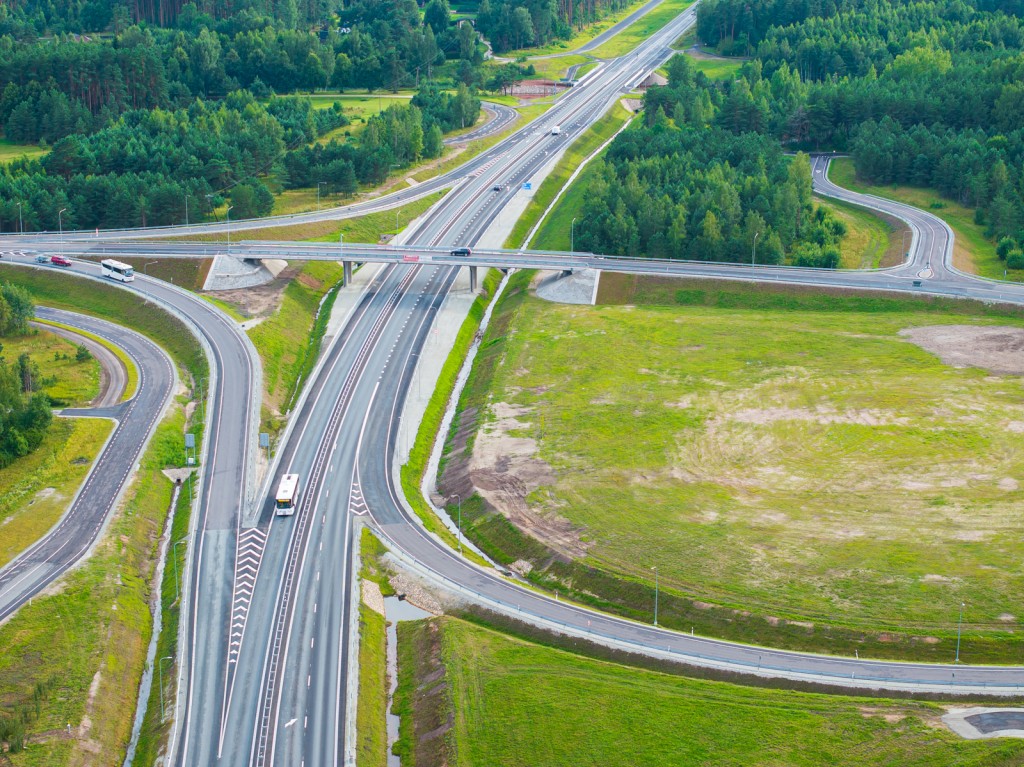
Transport Administration has already taken climate change impact into account on Via Baltica Pärnu-Uulu 2+2 and Tartu highway Neanurme-Pikknurme 2+1 roads, both completed this year. The next climate-proof construction projects will be Via Baltica Sauga-Pärnu and Libatse-Nurme 2+2 roads, and Harku grade-separated junction on Paldiski highway.
According to Tõnis Tagger, the Transport Administration's coordinator for the environmental management of road infrastructure, the following solutions are also being developed in cooperation with experts in the field. “To ensure that our roads are safe and resilient in a changing climate, we need to take into account modern requirements, energy efficiency and greenhouse gas emissions when building them. For example, our roads must be able to withstand torrential rain as well as summer heatwaves,” Tagger said.
To ensure climate proofing, the Transport Administration carries out related analyses and climate change impact assessments for major road projects. The design will take into account new input data and materials that are better adapted to the climate conditions, which, among other things, will increase the intervals between repairs and reduce the need for new or additional materials.
“In Estonia, future roads are already being designed today to withstand floods, storms, drought and extreme cold and hot spells. We are looking for and implementing new solutions, such as the reuse of milling waste in asphalt pavement layers, the use of construction and demolition waste on site as much as possible, and asphalt mixes with reduced temperatures,” Tagger added.
Reducing road lengths and smoother traffic flow are also prioritised in road construction and reconstruction. For example, the new 5.3 km shorter Kose-Mäo road will save around 2,500 tonnes of CO2 every year compared to the old road.
According to Kaarel Karolin, climate expert at Skepast & Puhkim design company, building a road network that can withstand extreme weather conditions is a necessity. This is the case even if climate impacts turn out to be less severe in Estonia. “Climate-proofing is not always expensive. It is a smart, informed and forward-looking approach that follows the best international practice. Research and experience so far show that nature-based solutions such as planting hedgerows on roadsides, low greenery and nearby ponds protect roads from excessive stormwater. This is particularly important in the event of heavy downpours, where we can mitigate the effects and make our roads safer for all road users,” said Karolin.
Karolin pointed out that, in addition to safety, proactive action and the adoption of climate-resilient solutions can help reduce or prevent climate change-related damages and costs. Climate-proofing analyses and the consideration of new requirements in infrastructure design are also a factor in securing or being able to apply for EU co-financing.
Photos of the sites by Sven Zacek can be found HERE.

