
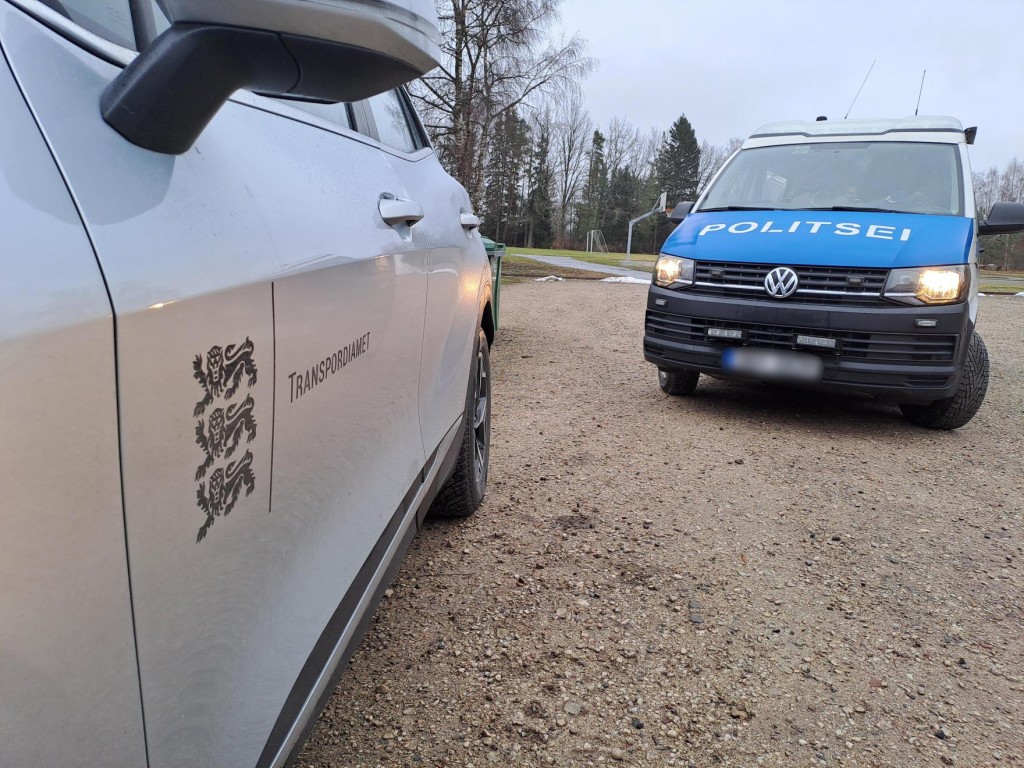
A total of 31 vehicles were inspected: 22 in cooperation with the police, and nine by the Transport Administration alone.
Karl Tiitson, the head of the Transport Supervision Unit at the Transport Administration, describes the outcome as disheartening. “Every parent whose kids take the bus to school has good reason to be worried,” he said. “It makes me especially sad knowing that some of those who organise such transport – which is usually the local government, but also those who operate the routes – are doing this deliberately, in my opinion. How else can you explain two bus drivers just driving away and leaving the kids behind when they spotted the inspectors, or one company that offers school bus services sending as many as four buses for extraordinary inspection? Then there was the bus driver who had to borrow a fire extinguisher from the school just to drive the kids home safely.”
Eduard Blaško, a traffic group investigator with the East Prefecture of the Police and Border Guard Board, says there can be no compromises when it comes to safety, especially where it affects the smallest and most vulnerable road users. “The technical requirements set for vehicles aren’t just sentences in some law or regulation,” he remarked. “They have a significantly greater meaning in real-life situations, and they were established with the intention of ensuring the safety of passengers.”
He added that a positive attitude towards these requirements and complying with them must become the norm. “Parents, teachers, those who arrange transport and bus drivers themselves should feel responsible for ensuring kids’ safety when taking them from one place to another,” he said. “The buses need to be in good condition, the kids must wear seatbelts, and if a violation or deviation from requirements occurs, it must be responded to immediately – otherwise the safety of passengers will be compromised.”
As a result of the checks, seven buses were sent for extraordinary inspection and one bus was found not to have undergone any vehicle inspection. This means that a quarter of the buses that were inspected should not have been transporting children at all, and yet they were. The reason that certain buses were sent for extraordinary inspection was missing, uninspected or permanently attached fire extinguishers – one of which had last been inspected in 2013.
However, there were also defective seatbelts, as well as non-functioning glass breakers near emergency exits. Moreover, in one of the buses the hazard lights on the dashboard had been taped over.
A more serious problem this time was the drivers of the buses themselves: one had an expired driving licence; one had never received any professional training; many had not had their driving competence certified for more than 10 years; and there were drivers who had attended training but had updated their documents (i.e. they had not paid the state fees, which in the eyes of the law equates to driving without the competence to do so). More than half of the buses that were inspected bore the incorrect children-on-board sign, or did not have one. With most of the buses, there were shortcomings to do with the documentation granting the right to transport children.
Tiitson says it is worrying that the problems uncovered during the inspections are largely connected to road safety, such as the roadworthiness of vehicles, drivers’ competence, working hours and rest periods, safety signs and use of hazard lights when stopping.
“The requirements for transporting children aren’t mere formalities,” he stressed. “They play an important role in ensuring the safety of children in public transport. It is up to those who operate the routes to ensure that their vehicles comply with all of the requirements, which includes children-on-board signs being installed as required.”
The inspections carried out by the Transport Administration and the Police and Border Guard Board were designed to increase awareness and to ensure that children are transported safely and in accordance with current legislation.

